

There are plenty of different ways to travel, and each one comes with its own set of challenges. I've spent more time than most wandering around this world, by just about every means of transportation there is. Along those journeys, I learned how to break away from the usual tourist flow and really appreciate the overlooked aspects of traveling.
Sketching was the surprising solution to my problem of not really seeing destinations during my trips.
In this guide, we'll go over the easiest ways to carry your art gear and how to get the most out of each trip.
Why traveling with a sketchbook changes everything
Sketchbooks don't take up much space in your luggage, but they can completely alter the way you experience a destination. The best change you'll notice is that when you head out with the intention of sketching, you have to slow down.
Part of you might not want to stop because there could be a better spot just down the road. Try to avoid this thinking. When something catches your attention, find a spot to pull out your sketchbook and get to work.
The best part is that you're moving through the destination with intent. Instead of rushing to see all the landmarks, you actually appreciate that hand-carved statue most people barely notice. You're connected to the artist who chiseled it, appreciating the effort and details that went into it. Simple things like street layouts become marvels that so many people miss, but when you pull out that sketchbook, you're giving a nod to the architect.
A lot of people take photos (guilty as charged), but unless you're going back over all 500 pics you snapped, there's going to be so much you missed, even though you captured that moment.
Choosing the Right Sketchbook for Travel
When it comes to travel sketchbooks, smaller is usually better...to a degree. Nobody wants to sketch on a post-it note. Good sizes to aim for are A5 or A6 if you want something even more compact. If you have room or don't mind carrying a bookbag, you can get away with an A4 book.
For watercolors, I like the Cottonwood Arts B8 Hot Press Notebook. It's relatively inexpensive and comes with 60 pages. If you're particular about your paper, you can easily make your own sketchbook. There are plenty of YouTube videos on how to do this, and it's pretty simple.
You can never go wrong by heading to your nearest art supply store and finding a notebook that fits your needs and budget. A mixed media book is best if you don't know what type of art you'll do when the mood strikes. For anything other than watercolor, I head to my local art store and grab a cheap hardcover mixed media book around A5 size.
If you have any questions about paper size, jetpens.com put together a good little reference.
Keep Your Travel Sketch Kit Simple
The goal for your travel sketch kit should be keeping it as small as practical. For painting, I like the shorter brushes and protect them by slipping straws over the bristles. I keep everything in a small pencil pouch, which protects it all and keeps it together.
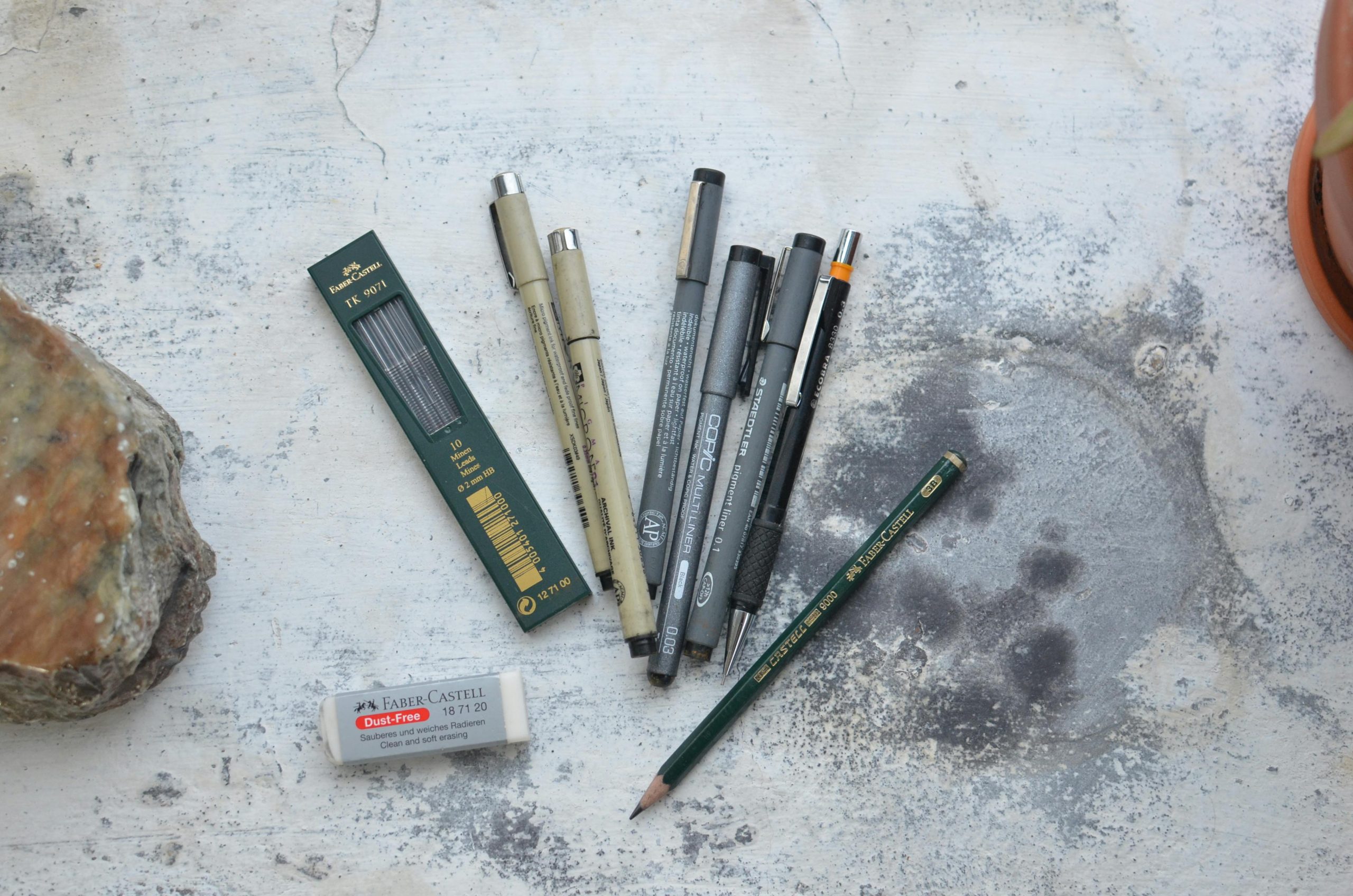
I take a few colored pencils, regular pencils, and some pens. My kit looks like this:
- Sketchbook
- Micron pens
- Mechanical pencil
- A few colored pencils
- A couple short watercolor brushes in different sizes (protected by straws)
- Small plastic container for water
Honestly, just use your favorite tools. Most of the time you'll have no issue fitting it all in a pencil pouch.
Finding Time to Sketch When Traveling
During my trips, I like to have a couple places on my to-do list. Most of the time it'll be a short hike to a great lookout spot, and I know I'll want to spend some time taking in the views. This is the easiest time to sketch.
When I started traveling, I'd regularly leave my sketching gear back at the hotel and would find there'd be some downtime that would've been perfect for a quick sketch. I started carrying my kit most of the time since it takes up barely any space, and you never know when you'll have a few minutes to jot something down.
The best times I've found: getting coffee in the morning, waiting in lines, or waiting for the check (if you've ever been to Europe, you know what I'm talking about).
Think about sketching moments, not necessarily scenes. Don't worry about perfection. If there's a scene you really want to go all out on, snap a picture and when you get back home, you can recreate that moment.
Sketching in Public (and Getting Comfortable with It)
I've always been kind of introverted, so the idea of just sitting alone sketching strangers used to feel crazy to me. Part of art is pushing past your comfort zone and seeing what you're actually capable of.
The first time you ask for "just one" at a café can feel embarrassing, but nobody cares you're there alone. Literally nobody cares.
Some people might not like being sketched for portraits, and you might get some weird stares if you're doing that. If portraiture is your thing, it's probably best to ask first.
Using Sketches as a Travel Journal
I like to think of my sketches as more of a story instead of a beautiful piece of art. I try to capture the mood of the moment more than the exact scene. It's great when you can look back on those sketches and remember what you were feeling and why.
Bonus tip: write some words down explaining how you're feeling or whatever comes to mind. It's funny — looking back at sketches versus my photos, there's so much more heart and depth to the terrible drawings than the photos.
Letting Travel Influence Your Art
The whole idea of this site is to push you past your comfort zone so you can grow as an artist and a person. On your travels, there's no pressure to produce, just enjoy the moment, and if it feels right, whip out that sketchbook and get to work.
Don't force things either. Sometimes I feel like I haven't sketched enough during a trip, but all that means is I was living in the moment. That's the whole reason I started sketching on my trips, so I wasn't another zombie tourist just checking things off a to-do list.
Don't forget to pack your sketchbook on your next trip. You might find a deeper sense of what traveling and exploring can be.